
Arbuscular Mycorrhizal Fungi
Everywhere we walk, a vast and living network lies hidden beneath our feet.
Arbuscular Mycorrhizal Fungi (AMF) engage in an ancient symbiosis with plants. The vast majority of our crops actively rely on this powerful symbiosis for nutrients and defense. Scientific discovery around AMF is constantly expanding, yet very little of it is clearly communicated beyond academia. Take a deeper look at this fascinating symbiosis.
The Arbuscule:
A Symbiotic Hub
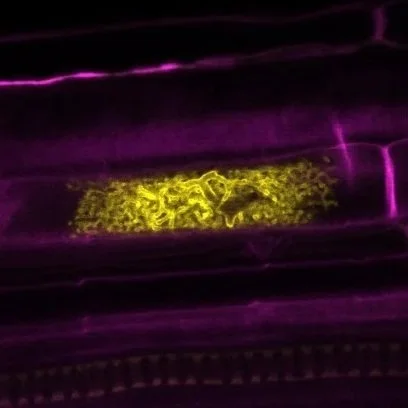
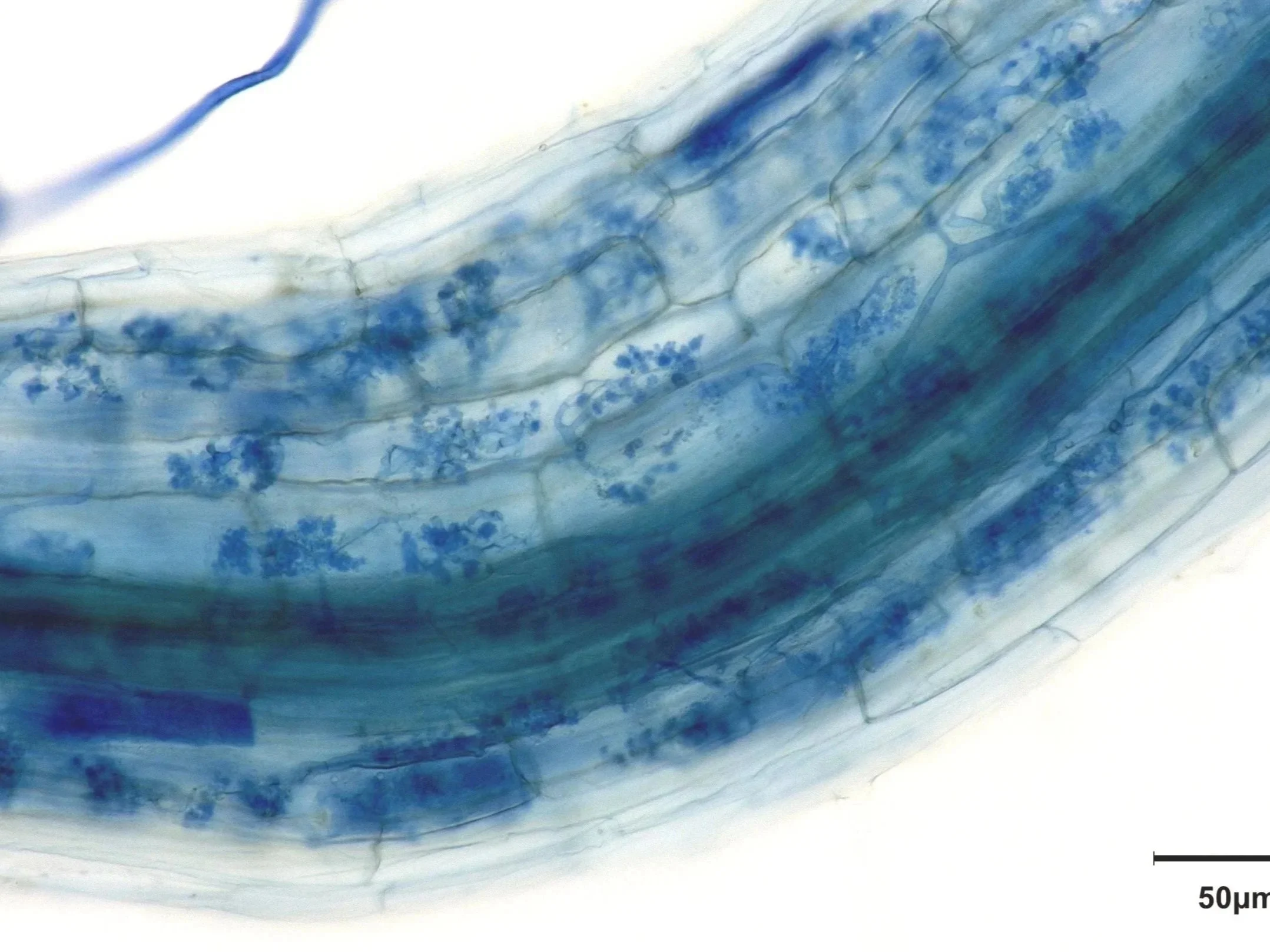
Inside plant roots, AMF form small, tree-like structures called arbuscules, which give these fungi their name. Through their remarkable surface area, arbuscules act as the principal hubs of nutrient exchange. The plant provides the fungus with surplus lipids, and the fungus in turn provides mineral nutrients, primarily Phosphorus (P) and Nitrogen (N).
Living in Close Quarters
In nature, plants and AMF are almost inseparable, much like humans and our gut microbiomes. The filamentous hyphae of these fungi can occupy a large proportion of a plant’s root system. In doing so, fungi connect plants directly into a vast underground network, linking many neighbouring plants together.
Fungi that live inside plants may prompt us to think of pathogens and disease, but AMF are some of the plant kingdom’s oldest allies. AM symbiosis dates back ~500 million years, when plants first began to colonise dry land. Today, up to 90% of all plant species engage in symbiosis with AMF.
As such, plants have evolved alongside AMF, and many of their vital processes actively rely on the symbiosis. Research shows that AMF may act as an immune system of sorts, helping plants detect disease early and prepare their defenses ahead of infection.